



XTherma: The Korean Radiofrequency Treatment Arriving in London
Four years in Korean clinics. Now at the Dr Sebagh Clinic in London.
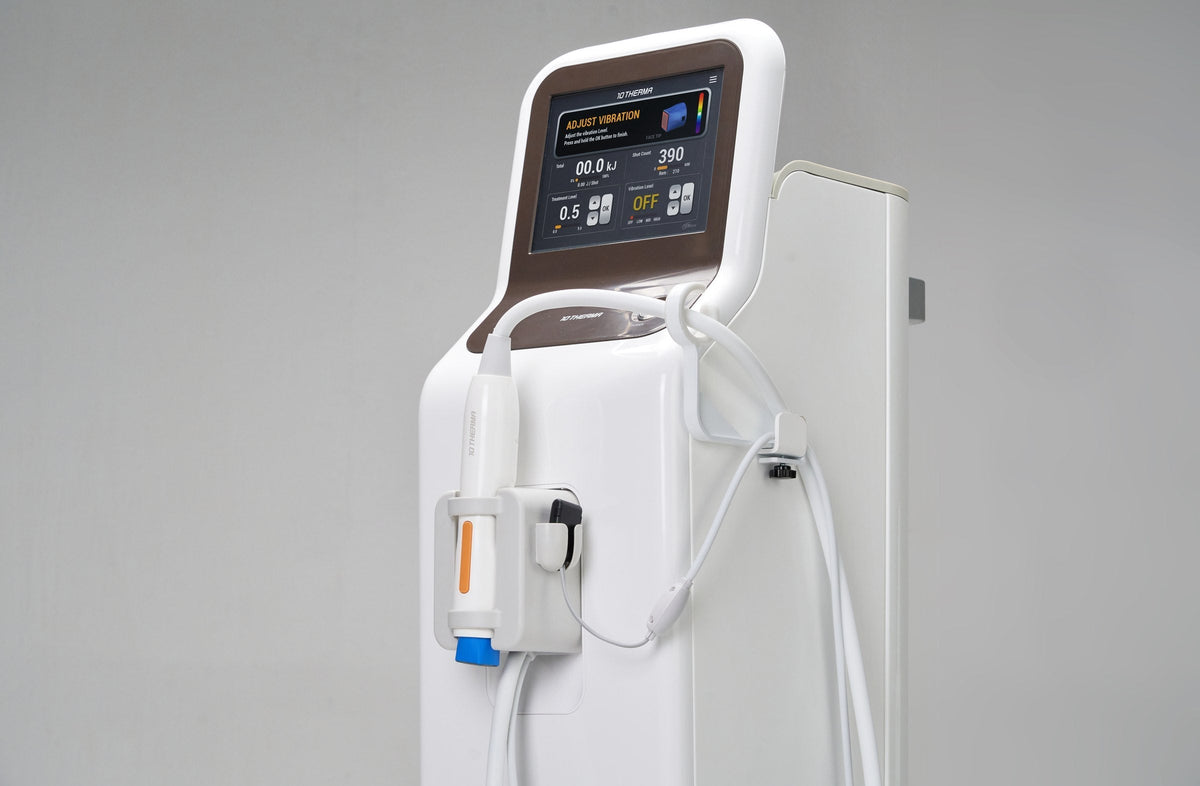
XTherma is a monopolar radiofrequency device: controlled heat delivered deep into the dermis, with cryogen cooling protecting the surface throughout. No needles. No incisions. No downtime.
Here is what that means, and what it does not.
Where it comes from
The device is made by Tentech in South Korea, where it is sold as 10THERMA. It has been in clinical use since 2022, and is now used in clinics across Asia, Europe, Australia and the United States. Internationally it is known as XTherma. Same machine, two names.
South Korea is one of the centres of aesthetic device engineering, and the country’s clinics tend to adopt new technology years before it reaches London. XTherma has taken the usual route: Seoul first, then everywhere else.
What monopolar radiofrequency actually does
Radiofrequency is a form of electromagnetic energy. As it passes through tissue it causes the water molecules within it to vibrate, and that movement generates heat inside the skin rather than applying it to the surface. This is the opposite of how most heat-based treatments are imagined to work.
Collagen responds to that heat. Between 40 and 60°C, collagen fibres in the dermis denature and contract. That is the immediate reaction. What follows over the weeks afterwards is the body’s own repair response, in which collagen is gradually rebuilt.
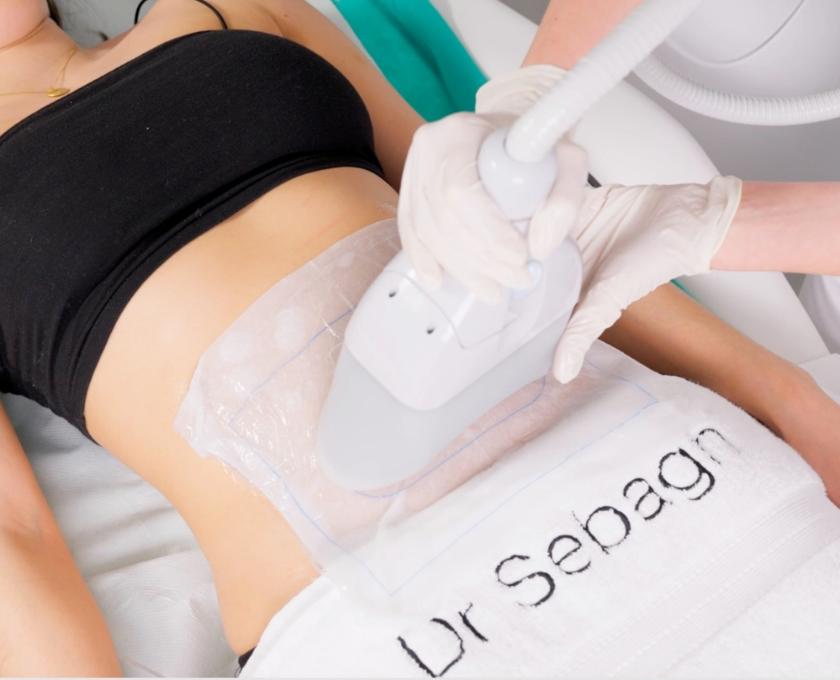
Monopolar describes how the energy travels: from the treatment tip, through the tissue, to a return pad placed on the body. Because the current takes a longer path, the heat reaches deeper layers than bipolar devices, which pass energy between two closely spaced electrodes at the surface.
It is worth being clear about what radiofrequency is not. It is not an injectable. It does not relax muscle, and it does not add volume. It works on the skin itself.
What makes this device different
Any radiofrequency device can deliver heat. The engineering question is how precisely, and how safely.
Cryogen fired with the energy, not after it. Cooling is delivered in seven pulses around every shot: two before, three during, two after. The surface stays protected while the energy works below it.
Impedance matching. The device reads the electrical resistance of your skin, which varies with hydration and with the fat content of the tissue, and calibrates the output accordingly. No two faces are treated identically, and no two areas of the same face are either.
Smart Temperature Cooling. Sensors sit at the corners of each tip and monitor the surface throughout treatment. Above 45°C, the device stops and waits.
Pressure sensing. The device will not fire unless the tip is in proper contact with the skin.
Separate treatment tips are matched to the area being treated, from the fine skin around the eyes to the face and neck. The specification is monopolar radiofrequency at 6.78MHz, with a maximum output of 400W.
What a treatment involves
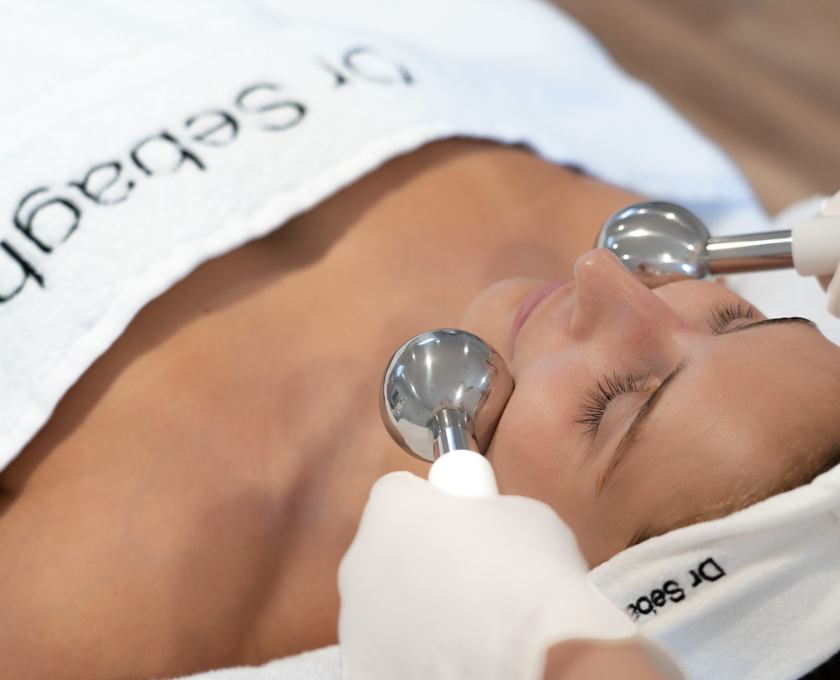
An appointment takes 40 minutes. A coupling fluid is applied and the tip is worked across the treatment area. You will feel warmth, and the cold pulse of the cooling around each shot.
Numbing cream and local anaesthetic are both available. If you know you are sensitive, Dr Sebagh suggests taking an over-the-counter painkiller such as paracetamol an hour before your appointment.
There is no downtime. Dr Sebagh recommends two sessions, spaced one to two months apart, and XTherma can be carried out on the same day as Botox or skin boosters.
Who it suits
XTherma is used for mild to moderate skin laxity, in patients who are not looking for a surgical route. It suits a range of ages, and it is not a treatment for women only.
It is not suitable if you have a cardiac pacemaker or an implantable defibrillator, if you are pregnant or breastfeeding, or if there is an active infection in the area to be treated. Several other circumstances need a specialist’s judgement first, including autoimmune conditions, a history of keloid scarring and facial implants. The full list is on the XTherma treatment page, and your medical history is taken in consultation regardless.
Whether it is right for you is a decision made in consultation, not online.
Booking
XTherma is available at the Dr Sebagh clinic in London. Price is determined by the number of shots delivered, from £600 for the eye area to £1,500 for the full face including brows and neck. Every treatment begins with a consultation.
FAQ
Is XTherma the same as 10THERMA?
Yes. The device is manufactured by Tentech in South Korea as 10THERMA and is known internationally as XTherma. They are the same machine.
Is radiofrequency the same as HIFU?
No. Both use energy to heat tissue, but they are different technologies. HIFU uses focused ultrasound, radiofrequency uses electromagnetic energy. Which suits you is a matter for consultation. You can read more about our HIFU treatment on the Ultralift page.
How is XTherma different from Thermage?
Both are monopolar radiofrequency treatments. XTherma is a newer device from a different manufacturer. Which is appropriate for you is a matter for consultation.
Does it hurt?
You will feel heat during treatment, offset by cryogen cooling delivered around every shot. Numbing cream and local anaesthetic are both available if you would like them, and your practitioner adjusts the energy in response to how you find it.
Is there any downtime?
No. You can return to your day immediately afterwards.
How many sessions will I need?
Dr Sebagh recommends two, spaced one to two months apart.
Read more

Four cities, four weeks, endless late nights. Fashion editor Chloe Street on the skin prep, the travel routine and the recovery treatments that get her through fashion month.

Under-eye bags and puffiness are not the same thing. Dr Sebagh explains the difference, what causes each, and which skincare and clinic treatments genuinely work.
Leave a comment
All comments are moderated before being published.
This site is protected by hCaptcha and the hCaptcha Privacy Policy and Terms of Service apply.