



How Sunlight Affects Collagen: UV Damage, Photoageing and How to Protect Skin Firmness
Collagen is the scaffolding that keeps skin firm, lifted and resilient. Sunlight is its single biggest external threat. This guide explains precisely what UV exposure does to collagen, why the damage is cumulative and largely invisible until it isn't, and what a science-led skincare routine can do to slow, counter and — in part — reverse it.
"The relationship between sunlight and collagen is cumulative, largely invisible and, crucially, largely within our control."
Sunlight and Collagen: At a Glance
| What it is | UV radiation from sunlight breaks down collagen fibres, accelerates elastin degradation and triggers chronic low-grade inflammation — together producing the visible signs of photoageing. |
| Best understood by | Anyone who spends time outdoors, drives regularly, sits near windows, or has a history of unprotected sun exposure. |
| Primary concern | UVA is the main driver of collagen breakdown — it penetrates deeply into the dermis year-round, through cloud cover and through glass. |
| Key visible effects | Loss of firmness and elasticity, fine lines and deeper wrinkles, uneven skin tone, dullness, and a gradual thinning of the skin. |
| Key protective ingredients | Broad-spectrum SPF (UVA and UVB), Vitamin C (antioxidant + collagen synthesis), Peptides, Retinol, Exosomes. |
| Can sun damage be reversed? | Partially. New collagen production can be stimulated, but prevention remains the most effective strategy. |
01 — Photoageing
What is photoageing, and how is it different from normal skin ageing?
Skin ages in two distinct ways. Intrinsic ageing is the biological process: collagen production slows by roughly 1% per year from the mid-twenties, skin gradually thins, and the dermal matrix loses its density over time. This form of ageing is largely written into our biology.
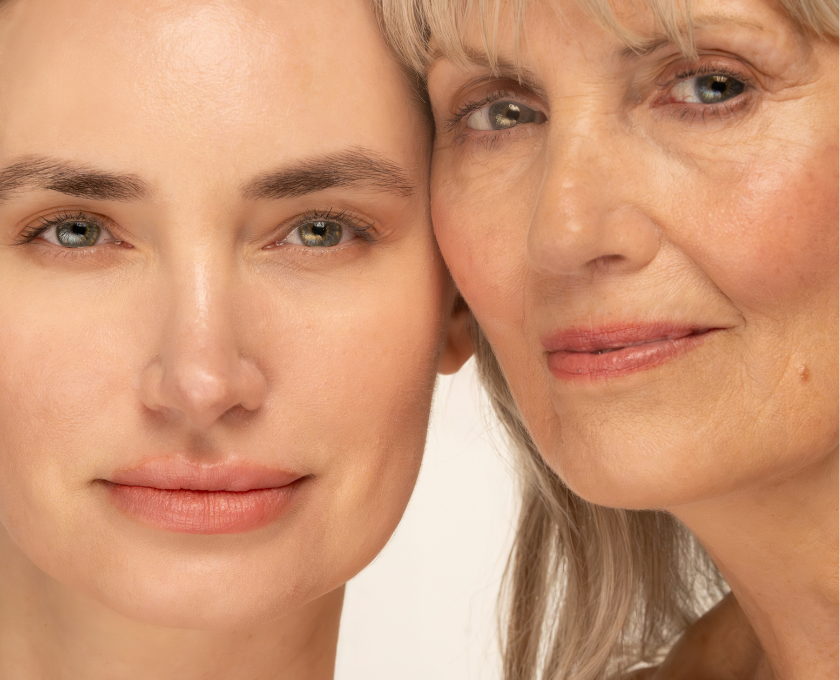
Photoageing is something different — and, critically, something preventable. It is the accelerated degradation of skin structure caused by cumulative UV exposure over a lifetime. Photoaged skin does not simply look older than it is; it has a different texture, quality and pattern of damage. Deeper wrinkles forming earlier, a leathery or thickened surface, uneven pigmentation, visible broken capillaries and pronounced loss of elasticity are all hallmarks of photoageing rather than natural ageing.
The distinction matters enormously for skincare. Intrinsic ageing can be slowed and supported. Photoageing, to a meaningful degree, can be prevented. And what has already occurred can be partially addressed — but only if the mechanism causing it is understood and interrupted.
For more on how collagen supports skin firmness and what drives its decline, read the Dr Sebagh Collagen Guide.
02 — UVA vs UVB
What is the difference between UVA and UVB, and what does each do to collagen?
Sunlight reaches the skin as a spectrum. Two bands matter most for collagen health.
UVB (shorter wavelength, higher energy) acts on the skin's surface. It is the primary cause of sunburn and has a direct role in skin cancer risk. UVB levels are higher in summer and at altitude, and are significantly reduced by cloud cover. Glass blocks most UVB.
UVA (longer wavelength) is the more insidious threat where collagen is concerned. UVA penetrates deeply into the dermis — the layer where collagen and elastin fibres live — and its levels remain broadly constant year-round, regardless of season, weather or time of day. Glass does not meaningfully block UVA. A window seat on a long-haul flight, or a desk positioned near a window for years, represents meaningful cumulative UVA exposure.
In the dermis, UVA radiation activates enzymes called matrix metalloproteinases (MMPs). These are collagen-degrading enzymes that the body uses in small quantities for normal skin repair. UV exposure triggers their overproduction, resulting in collagen fibres being broken down faster than the skin's fibroblasts can replace them. Simultaneously, UVA generates free radicals that cause oxidative stress throughout the dermal matrix — disrupting collagen synthesis at the cellular level and weakening elastin fibres that give skin its ability to spring back.
The result, accumulated over years, is the structural collapse visible in photoaged skin.

03 — Cloudy Days & Windows
Does UV exposure still damage collagen on cloudy days and through windows?
Yes. This is one of the most consistently underestimated aspects of UV protection.
Cloud cover reduces UVB by around 20%, but UVA levels are barely affected. A cloudy day in the UK still represents meaningful UVA exposure for anyone spending time outside. Driving delivers sustained UVA exposure to the left-hand side of the face, neck and the back of the left hand — a phenomenon well-documented in studies examining asymmetric photoageing.
Window glass filters UVB almost entirely but transmits most UVA. This means time spent near windows — at a desk, in a car, on a plane, in a café — constitutes daily UV exposure even in conditions that feel, intuitively, as if protection is unnecessary.
"Daily, year-round broad-spectrum SPF is not a summer recommendation. It is the baseline."
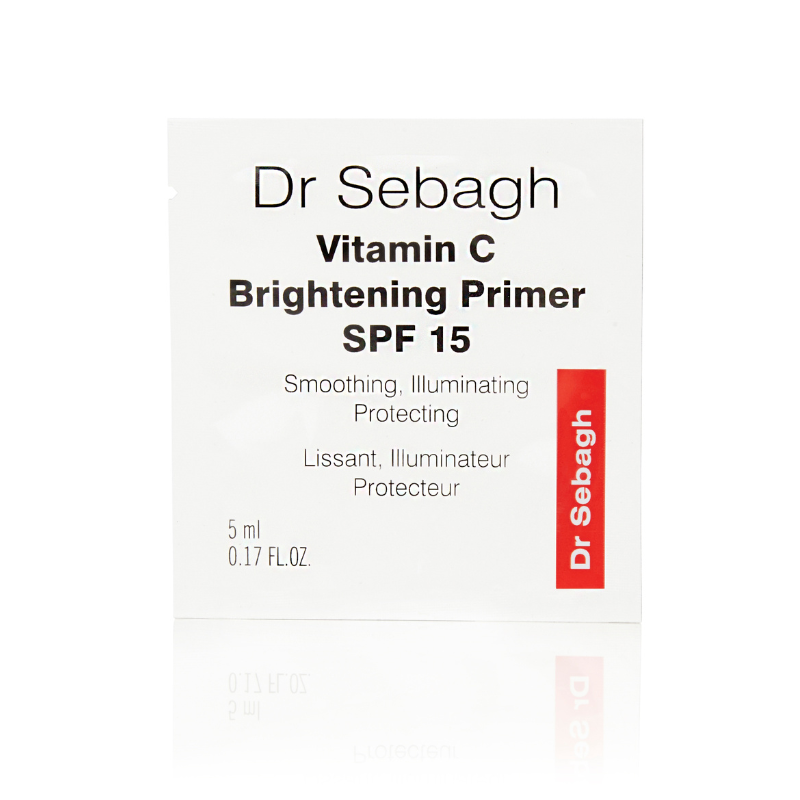
Broad-spectrum UVA and UVB protection with stabilised Vitamin C — in a single daily step. It prevents the ongoing collagen degradation that makes repair ingredients redundant, while simultaneously neutralising UV-generated free radicals and supporting new collagen synthesis. Applied every morning, regardless of season or weather.
Shop Vitamin C Brightening Primer SPF15 →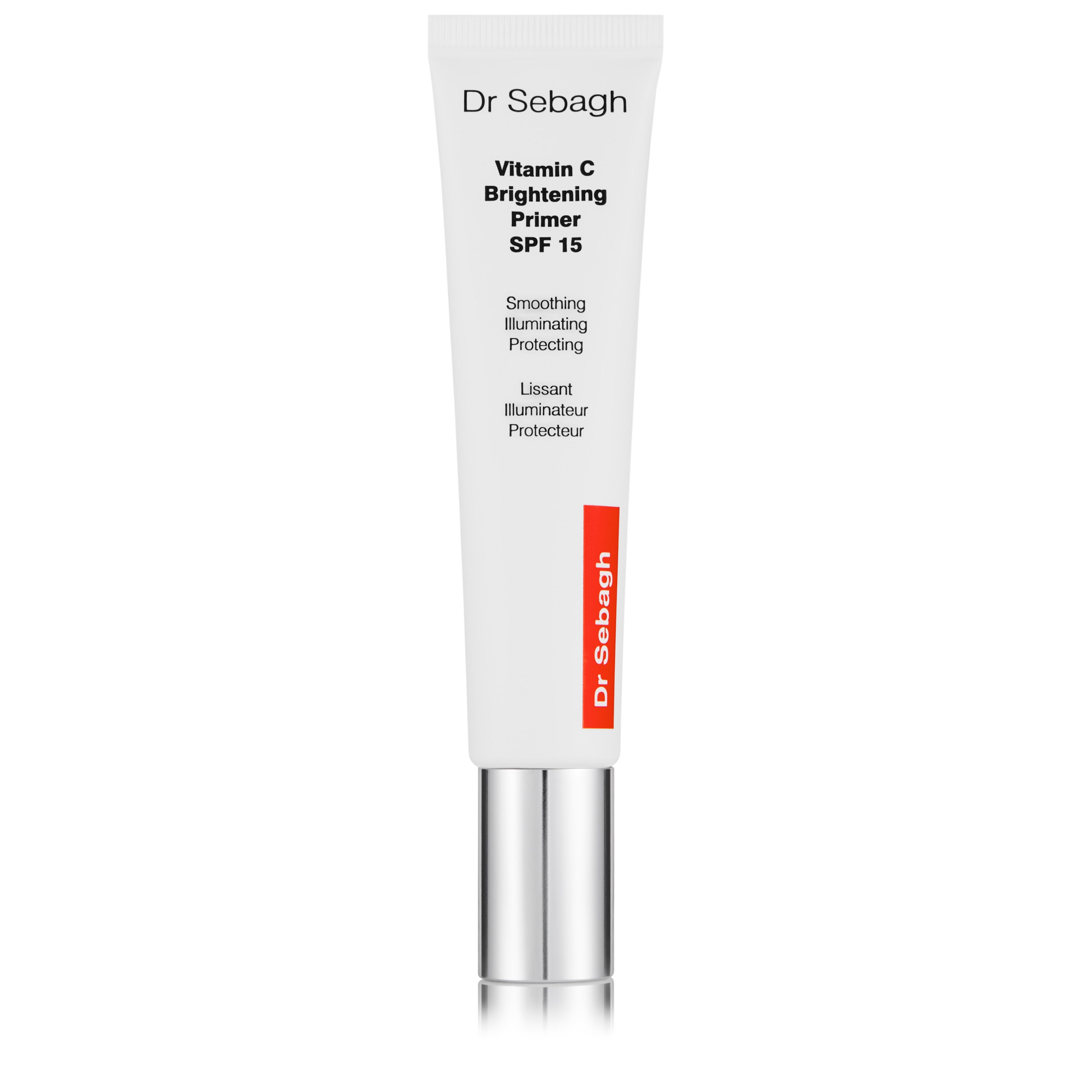
04 — The Tan Question
Is a tan a sign of collagen damage?
Yes — though not entirely in the way most people assume. The tan itself is not the damage; it is the skin's response to it. When UV radiation reaches the skin, melanocytes (the pigment-producing cells) release melanin to absorb further UV energy and slow the penetration of radiation into deeper layers. The resulting colour is visible evidence that the skin registered UV stress and activated a protective mechanism.
By the time a tan is visible, UV radiation has already reached the dermis. Collagen degradation has already begun. The tan is, in effect, a signal sent after the exposure rather than a barrier that prevented it.
This is why we consider sun-seeking for the purpose of colour a particularly counterproductive form of skin investment. The tan fades. The cumulative collagen damage does not.
If colour is the goal, UV exposure is not the method. Dr Sebagh Self-Tanning Drops deliver a buildable, natural-looking tan with no UV damage and no collagen degradation. Add a few drops to your serum or moisturiser and adjust the depth to your preference.
Shop Self-Tanning Drops →

05 — Speed of Damage
How quickly does UV exposure break down collagen?
Collagen degradation begins within minutes of significant UV exposure. MMP enzymes are activated rapidly on exposure to UV radiation, and their collagen-degrading activity can be measurable within hours.
What makes this particularly important to understand is the nature of accumulation. A single episode of sun exposure causes a small, finite amount of collagen breakdown. The skin can partially compensate. But repeated daily exposure — even at low levels — adds up over decades in ways that are not visible at the time. By the time photoageing is clearly apparent, it represents the cumulative damage of thousands of individual exposures, each of which seemed inconsequential.
There is no such thing as a harmless amount of unprotected UV exposure where long-term collagen health is concerned. There are only amounts whose effects take longer to become visible.
06 — Restoration
Can collagen lost to sun damage be restored?
Partially, and with the right approach, meaningfully so. The body retains the capacity to produce new collagen throughout life, and certain clinically active ingredients have been shown to stimulate fibroblasts — the cells responsible for collagen synthesis — even in skin that has sustained significant photoageing.
What cannot be restored is the time in which the damage accumulated. This is why combining active repair with rigorous ongoing protection is the only coherent strategy. Treating the damage while continuing to generate more of it is, plainly, not effective.
For a deeper understanding of chronic UV-related inflammation and how it accelerates dermal ageing, read the Dr Sebagh guide to Inflammaging.
07 — Protective Ingredients
Which skincare ingredients protect and help rebuild collagen after UV exposure?
No single ingredient is sufficient on its own. Protection and repair require a layered approach — each active targeting a distinct mechanism in the photoageing process.
- Broad-spectrum SPF — The non-negotiable foundation. Prevents ongoing degradation so repair ingredients can work effectively.
- Vitamin C — Neutralises UV-generated free radicals and acts as an essential co-factor in new collagen biosynthesis.
- Retinol — Directly stimulates fibroblasts to produce new collagen and elastin; reverses visible aspects of photoageing.
- Peptides — Signal to fibroblasts that collagen production is needed, reactivating suppressed output in photoaged skin.
- Exosomes — Carry growth factors and signalling molecules directly to skin cells, supporting collagen and elastin regeneration at a cellular level.
The Non-Negotiable Foundation
Broad-spectrum SPF
No collagen-supporting ingredient works effectively if UV damage is continuing in parallel. A broad-spectrum SPF that addresses both UVA and UVB is the single most important daily step in any collagen-protection strategy. It must be applied every morning, regardless of weather, season or time spent outdoors.
Protection and Synthesis in a Single Ingredient
Vitamin C
Vitamin C works on two distinct levels for collagen health. As a powerful antioxidant, it neutralises the free radicals generated by UV exposure before they reach the fibroblasts and collagen fibres in the dermis. And as a co-factor in collagen biosynthesis, it is essential to the process by which fibroblasts produce new collagen — the skin simply cannot synthesise collagen without it. This dual action makes vitamin C uniquely well-positioned for post-UV recovery, and for daily protection of existing collagen architecture.
Rebuilding the Dermal Matrix
Retinol
Retinol (Vitamin A) is one of the most comprehensively studied anti-ageing ingredients in dermatology. It accelerates cell turnover, directly stimulates fibroblasts to produce new collagen and elastin, improves dermal thickness, and reverses aspects of photoageing that have already become visible. It works at night, during the skin's natural repair cycle, which is precisely when collagen synthesis is most active.
Cellular Signalling for Collagen Production
Peptides
Peptides act as messenger molecules, signalling to fibroblasts that collagen production is needed. In photoaged skin, where the fibroblast's output has been suppressed by chronic UV stress and oxidative damage, peptide-rich formulas help to reactivate and support the collagen-building process.
Advanced Regenerative Repair
Exosomes
Exosomes are extracellular vesicles that carry growth factors and signalling molecules directly to skin cells. Applied topically in advanced formulations, they stimulate cellular communication, encourage fibroblast activity and support collagen and elastin regeneration in a way that represents one of the most significant recent developments in anti-ageing skincare.

08 — The Routine
The Dr Sebagh approach: a daily routine for collagen protection and repair
Sun protection and collagen repair are not separate categories — they are two halves of the same daily commitment. This is how we would approach them together.
☀ Morning — Protect & Defend
Antioxidant defence + SPF- Vitamin C Brightening Primer SPF15 — daily antioxidant protection and UVA/UVB defence in a single step
- Exo C Booster — plant-based exosomes, bio-synthesised collagen and stabilised Vitamin C; advanced morning repair and protection
◑ Night — Rebuild & Repair
Active collagen stimulation- Retinol Night Repair — 0.3% retinol serum; stimulates collagen renewal overnight while skin repairs
- Vitamin C Brightening Primer SPF15 — daily antioxidant protection with broad-spectrum SPF; the essential morning foundation
- Pure Vitamin C Powder Cream — pharmaceutical-grade vitamin C, activated on contact; directly supports fibroblasts and collagen synthesis
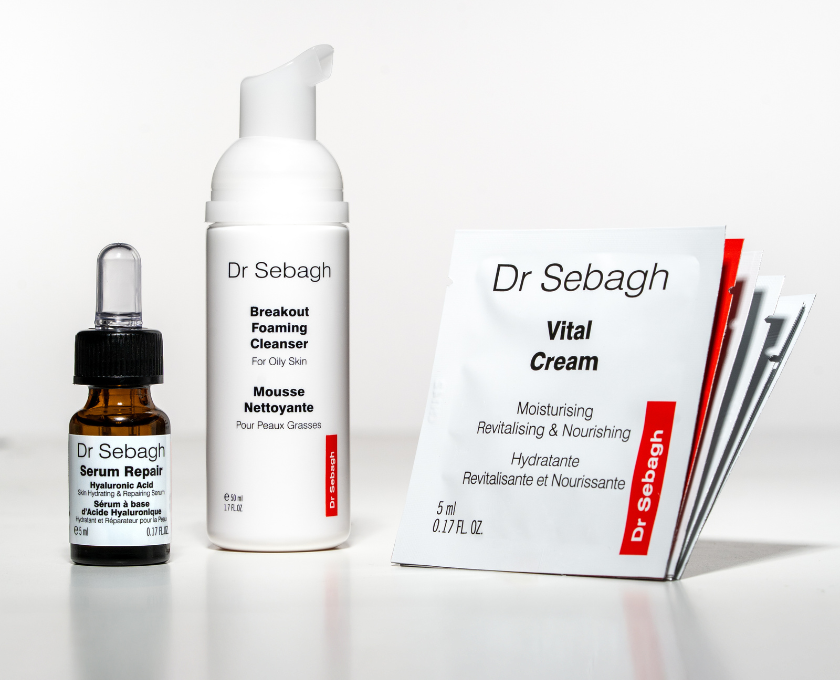
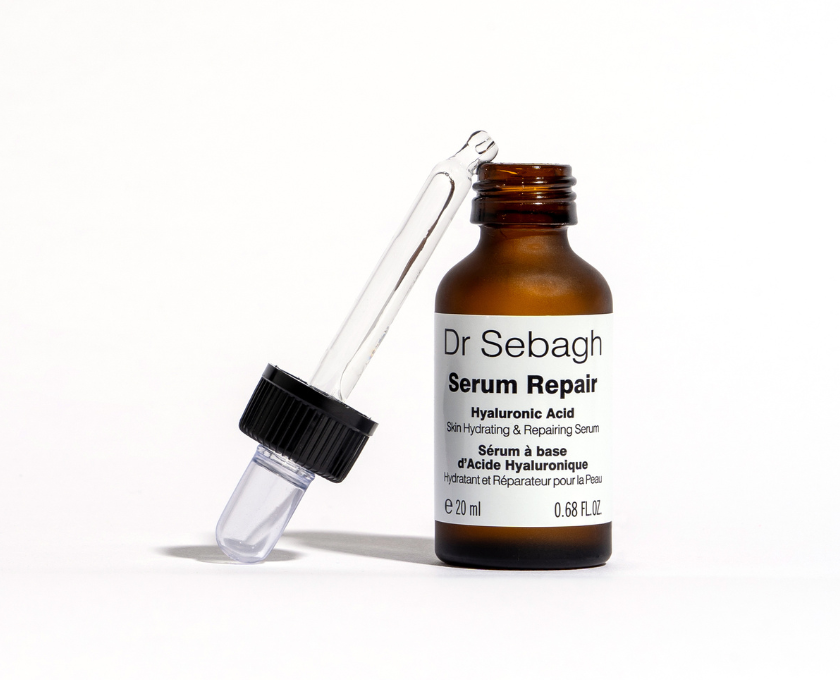
- Serum Repair — award-winning hyaluronic acid and peptide serum; strengthens the dermal matrix and supports collagen architecture
- Exo C Booster — next-generation regenerative serum with plant-based exosomes, bio-synthesised collagen and stabilised Vitamin C; the most advanced collagen-repair step in the range
- Retinol Night Repair — potent 0.3% retinol serum; stimulates collagen renewal overnight and improves firmness and texture

Our Position
Conclusion
The relationship between sunlight and collagen is cumulative, largely invisible and, crucially, largely within our control. The damage does not announce itself. It accumulates quietly over years of small exposures — the commute, the desk by the window, the afternoon spent outside without SPF — until the structural consequences become visible. At which point, most of the collagen involved in producing those consequences was broken down long ago.
The science is clear on what matters: daily broad-spectrum protection to prevent further degradation, and clinically active ingredients — vitamin C, peptides, retinol, exosomes — to support the fibroblasts in rebuilding what has been lost. Not as an occasional intervention, but as the consistent daily practice that ageing-maintenance, properly understood, has always been.

Read more
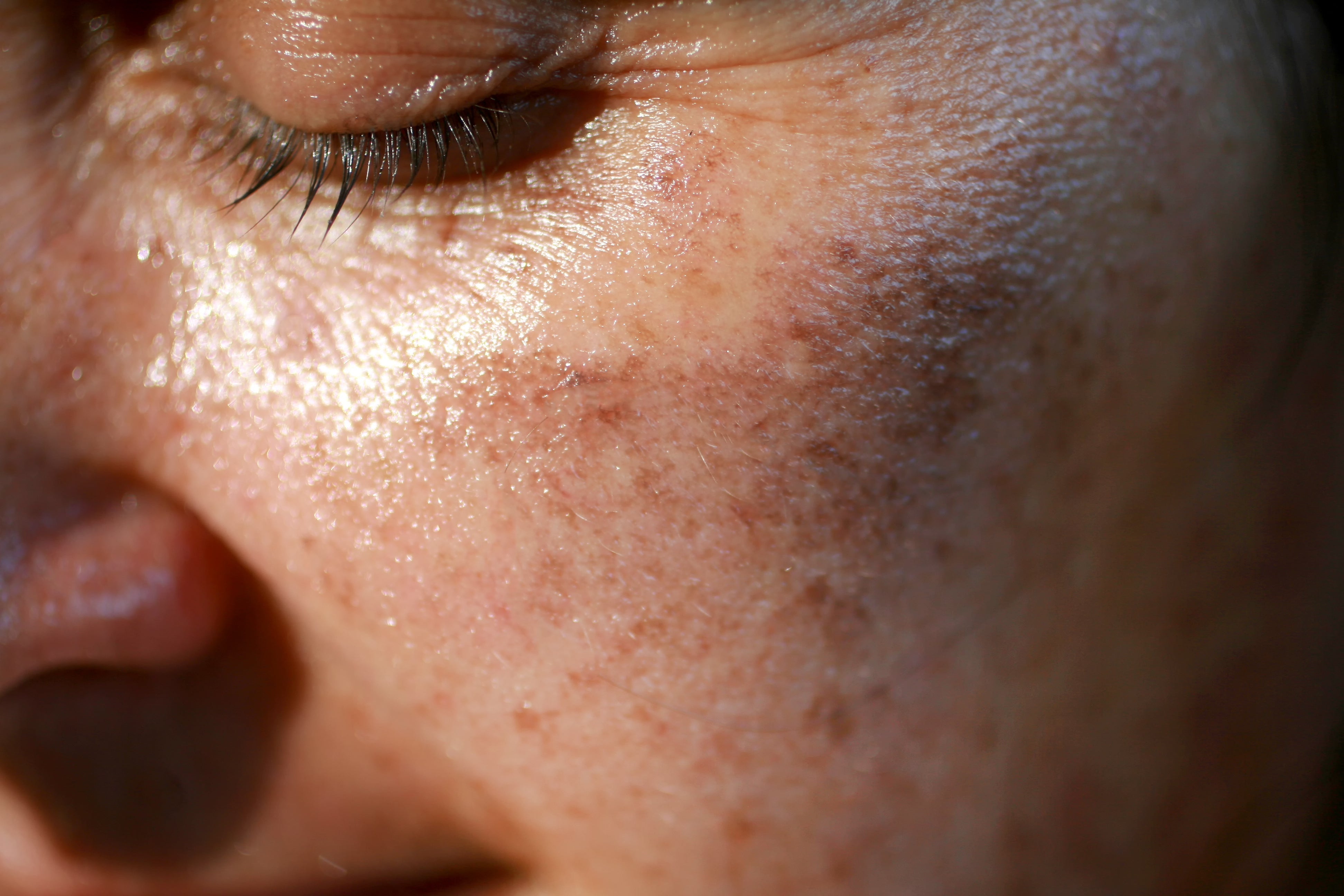
Sun-damaged skin can be visibly improved. Discover the at-home and in-clinic treatments that target age spots, uneven tone and fine lines, plus daily SPF tips.
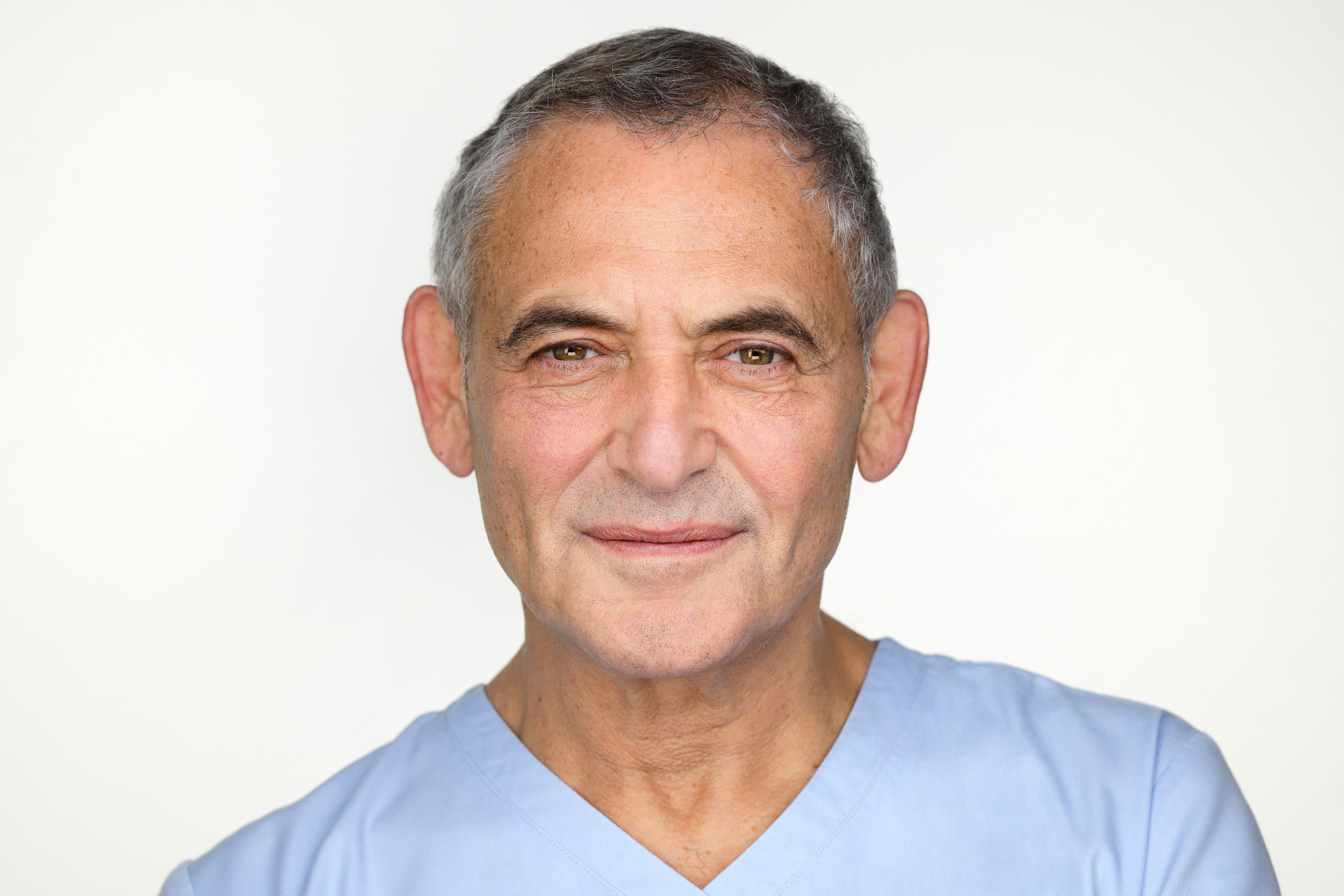
Dr Jean-Louis Sebagh was the first doctor to bring Botox to the UK, and for three decades the press has called him the King of Botox. Here, in his own words, he answers the questions he is asked mo...
Leave a comment
All comments are moderated before being published.
This site is protected by hCaptcha and the hCaptcha Privacy Policy and Terms of Service apply.