

Exfoliation for Anti-Aging: The Complete Guide to Brighter, Smoother Skin
There's a moment, usually sometime in your late 30s or 40s, when something shifts. The same products you've relied on for years seem to stop working. Your skin looks a little duller than it used to. Texture that used to smooth over by evening now stays put. Fine lines you could ignore at 32 are harder to ignore at 44. The instinct is to reach for something stronger, something newer. But often, the answer isn't a new product. It's a missing step.
That step is exfoliation. Specifically, understanding why your skin's own renewal system is slowing down, and what happens to your complexion when it does. Once you understand the mechanism, the solution becomes obvious. And so does the result.
"The skin you see today is not the skin your body made this month. As renewal slows, dead cells accumulate, bringing with them dullness, congestion, and the accelerated appearance of age."
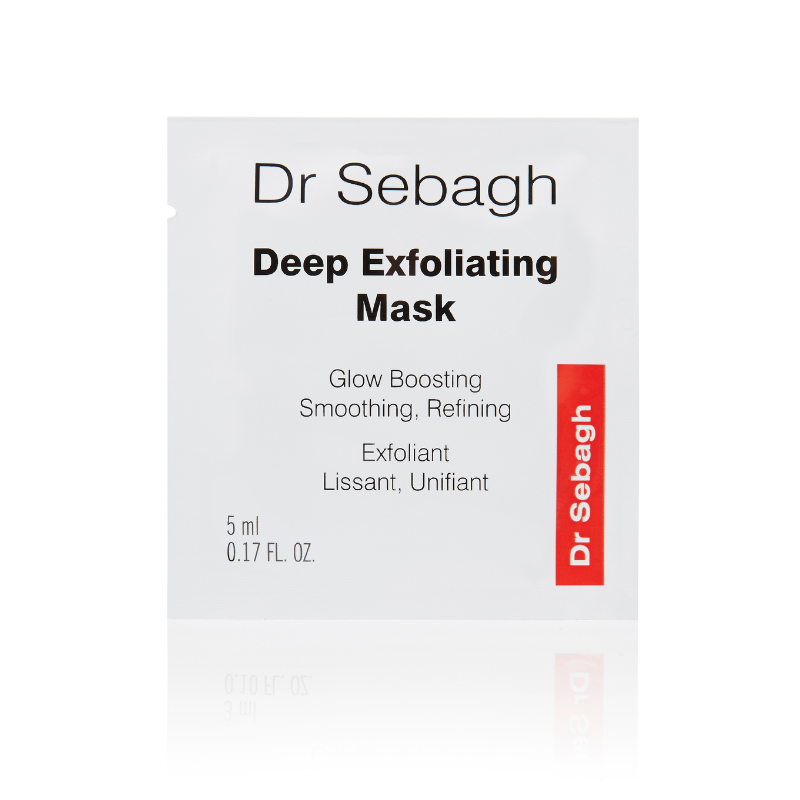
At Dr Sebagh, exfoliation is not an optional enhancement. It's considered a foundational step in what the brand calls the "ageing maintenance" routine. The Deep Exfoliating Mask, one of the brand's most enduring bestsellers, was developed precisely to address this biological reality: to restore the renewal your skin is no longer managing as efficiently on its own.
01 The Biology
Your Skin Is a Renewal System. Here's What Happens When That System Slows.
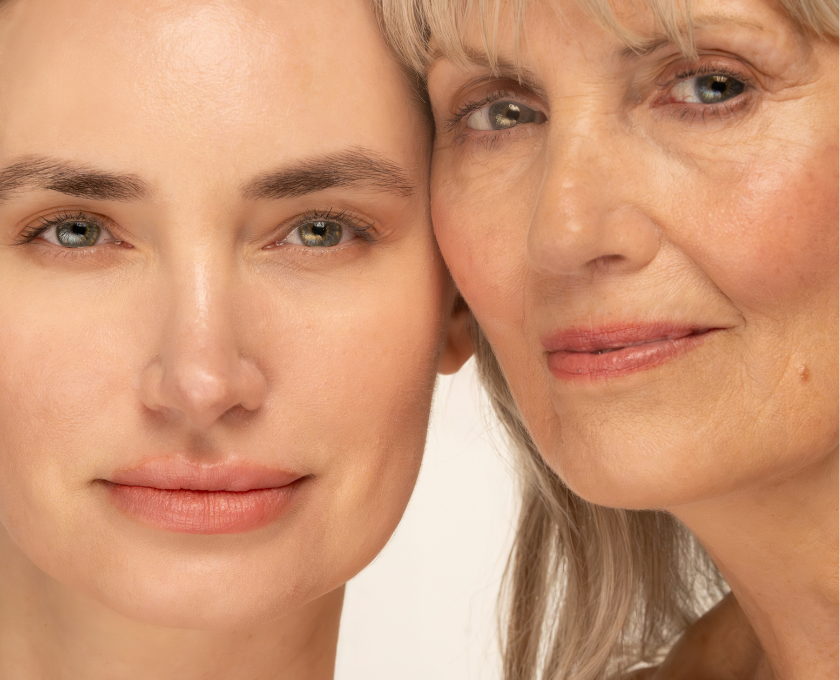
Healthy skin operates on a cycle. New cells are generated deep in the dermis, gradually migrate to the surface, and are shed, making way for fresh cells beneath. In your 20s, this cycle completes in roughly 28 days. The result is the clarity, luminosity, and smooth texture that defines young skin. It's not magic. It's biology.
As you age, that cycle lengthens, and the consequences accumulate on the surface of your skin.
35–40 days
Turnover begins to slow. The first signs of dullness appear. Pores start to look slightly enlarged. Skin begins to feel less responsive.
45–60 days
Slowdown becomes noticeable. Dead cell buildup creates a dull, uneven surface layer. Fine lines deepen. Products penetrate less effectively.
60+ days
Renewal is significantly reduced. Skin can appear flat, tired, and congested. Pigmentation and texture changes become more pronounced.
This is a completely natural process, but it is one of the primary drivers of the way skin visibly ages. The slowdown doesn't just affect how skin looks in the mirror. It affects everything: how well your serums absorb, how effectively your moisturiser works, how pronounced your fine lines appear in different light. Dead cells don't disappear on their own the way they once did. They accumulate.
And accumulation is the enemy of radiance.
02 The Effect
What Dead Cell Buildup Actually Does to Your Complexion
When skin renewal slows, the effects are cumulative, and they compound each other. Understanding exactly what's happening at the surface level explains why exfoliation addresses so many concerns simultaneously.
- Dullness and loss of radiance: Live skin cells have a naturally translucent quality that reflects light. Dead cells are opaque. As they accumulate, they form a matte, grey layer across the surface, blocking the light that gives skin its characteristic glow. No amount of highlighter compensates for this at the structural level.
- Uneven texture and rough patches: Dead cells don't shed uniformly. They build up faster in some areas than others, creating irregular surface texture, including rough patches on the cheeks, congestion around the nose, and dryness at the hairline. The overall complexion loses its polish.
- Deeper-looking fine lines and wrinkles: A layer of dead cells sitting over the skin's surface makes fine lines appear more pronounced, particularly in certain lights or after a long day. This effect is reversible. After exfoliation, the same lines frequently look visibly softer, because the uneven surface buildup around them has been cleared.
- Pigmentation that won't shift: Dark spots and post-blemish marks are concentrated in the outermost layers of the skin. When those layers aren't shedding efficiently, hyperpigmentation becomes entrenched, appearing darker, more defined, and more resistant to treatment.
- Congestion and enlarged pores: Excess dead cells and sebum accumulate inside the pore lining, causing congestion, blackheads, and the appearance of enlarged pores. This happens regardless of how thoroughly you cleanse, because cleansing does not remove the dead cell layer.
- Reduced efficacy of your entire skincare routine: This is perhaps the most underappreciated consequence. A layer of dead cells is a physical barrier. Serums, acids, peptides, and retinoids all work better, often dramatically better, on freshly exfoliated skin. If your routine has plateaued, this is frequently the reason.
03 The Intervention
What Exfoliation Actually Does, and Why It's Different From Cleansing
Cleansing removes surface impurities: makeup, excess oil, environmental residue. It does not remove the dead skin cell layer that sits on top of the epidermis. Exfoliation does. This is a categorical distinction, and it's why no cleanser, however thorough, can replicate what an exfoliant delivers.
By manually accelerating the shedding process your skin is no longer managing efficiently, exfoliation achieves several things at once: it immediately reveals fresher, more luminous skin beneath the dead layer; it clears the path for active ingredients to penetrate more deeply; it supports the skin's own renewal biology; and over time, with consistent use, it helps address the structural changes (pigmentation, texture, fine lines) that the slowdown in turnover has allowed to accumulate.
"Exfoliation is not a surface treatment. It is a reset, returning the skin to the kind of efficient, responsive renewal that characterises younger skin."
This is why dermatologists consistently recommend regular exfoliation as an anti-aging step, not merely a brightening one. Brightness is the visible result. Accelerated, healthy cell turnover is the mechanism.
04 The Method
Chemical vs. Physical Exfoliation: Why the Science Points Clearly in One Direction
There are two approaches to exfoliation: physical (mechanical scrubbing) and chemical (acid-based dissolution). For most skin, and particularly for mature, sensitive, or concern-prone skin, the clinical consensus has shifted decisively toward chemical exfoliation. Here's the evidence behind that shift.
Physical scrubs work through abrasion: tiny particles or textured surfaces manually dislodge dead cells. The problem is that abrasion is inherently imprecise. It is difficult to control the pressure applied, the depth of exfoliation, or the evenness of coverage. On thinner, more delicate skin, physical scrubbing can cause micro-tears, damage at the microscopic level that disrupts the skin barrier, triggers inflammation, and over time can accelerate rather than reverse the signs of ageing. For mature skin, this is a meaningful risk.
Chemical exfoliants, primarily AHAs (alpha-hydroxy acids such as lactic acid and glycolic acid) and BHAs (beta-hydroxy acids such as salicylic acid), work differently. They dissolve the molecular bonds that hold dead cells to the skin's surface, allowing those cells to detach and shed naturally and uniformly. There is no friction, no risk of micro-tearing, and the process is even across the entire surface.
Chemical Exfoliation (AHA/BHA)
- Dissolves cell bonds with no abrasive friction or micro-tears
- Even, controlled exfoliation across the entire surface
- Penetrates at multiple depths, not just the outermost layer
- Suitable for sensitive, mature, and concern-prone skin
- Less likely to cause redness, barrier disruption, or irritation
- Lactic acid additionally hydrates as it exfoliates
Physical Scrubs
- Abrasive particles remove cells through friction
- Difficult to control depth or evenness of exfoliation
- Risk of micro-tears in delicate or mature skin
- Can disrupt the skin barrier and trigger inflammation
- Not recommended by dermatologists for aging skin types
- Provides no additional hydration or active benefit
Among AHAs, lactic acid holds a particular distinction. It is larger in molecular size than glycolic acid, which means it works more gradually and with less potential for irritation, making it the preferred AHA for regular use, sensitive skin, and aging skin that may have a compromised barrier. It also has a secondary benefit that glycolic acid lacks: it is a natural humectant, drawing moisture into the skin as it exfoliates.

05 The Formula
Dr Sebagh Deep Exfoliating Mask: What It Contains, and Why It Works
The Dr Sebagh Deep Exfoliating Mask was formulated around lactic acid, the AHA that dermatologists consistently rank as the most appropriate for both efficacy and tolerance. Rather than a single-acid formula, it combines lactic acid with a precisely calibrated blend of complementary AHAs to deliver a broader spectrum of exfoliation action: surface clarity, deeper cell renewal, and improved penetration across multiple skin depths simultaneously.
The result is a five-minute treatment that achieves what most at-home exfoliants take considerably longer to deliver, if they deliver it at all. This is the principle behind every Dr Sebagh formulation: concentration and precision over frequency and accumulation.
The mask works across multiple visible concerns at once:
- Immediate radiance: The dead cell layer responsible for dullness is dissolved and cleared. Fresher, more luminous skin is revealed underneath, visibly brighter from the first use.
- Refined texture: Surface roughness, uneven patches, and enlarged-looking pores are smoothed. The complexion takes on a more polished, even quality.
- Softened fine lines: By clearing the surface layer that accentuates lines, and by stimulating healthy cell renewal at the base, fine lines appear visibly reduced both immediately and cumulatively with regular use.
- Faded pigmentation: Dark spots and sun damage sit in the outermost skin layers. Regular exfoliation lifts away these layers progressively, revealing clearer, more even tone beneath.
- Enhanced product absorption: With the dead cell barrier removed, serums, moisturisers, and treatment actives penetrate significantly more effectively. The rest of your routine performs better.
- Accelerated renewal: Regular use supports the skin's own turnover biology, encouraging the skin to shed and regenerate more efficiently over time, not just immediately after application.
- Deep Exfoliating Mask. The original AHA mask for all skin types. Five minutes to brighter, smoother, more refined skin.
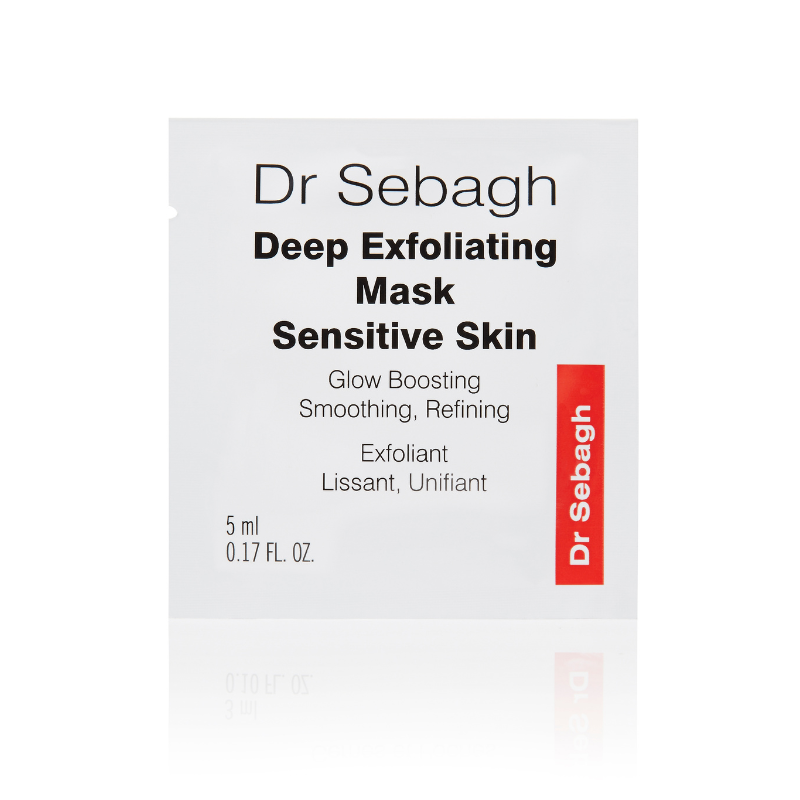
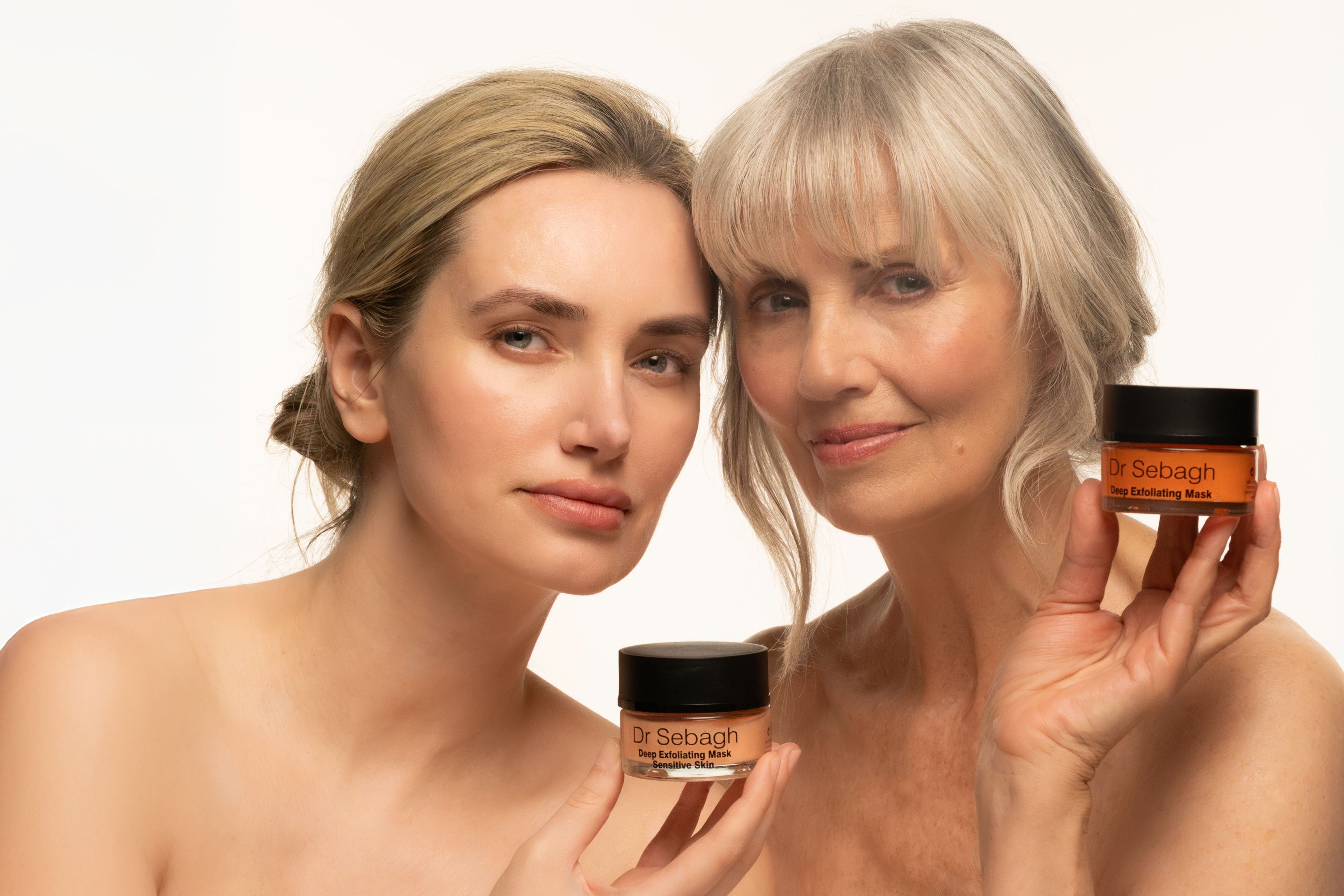
- Deep Exfoliating Mask for Sensitive Skin. The same clinical exfoliation in a gentler formula, developed specifically for reactive, rosacea-prone, or delicate skin.
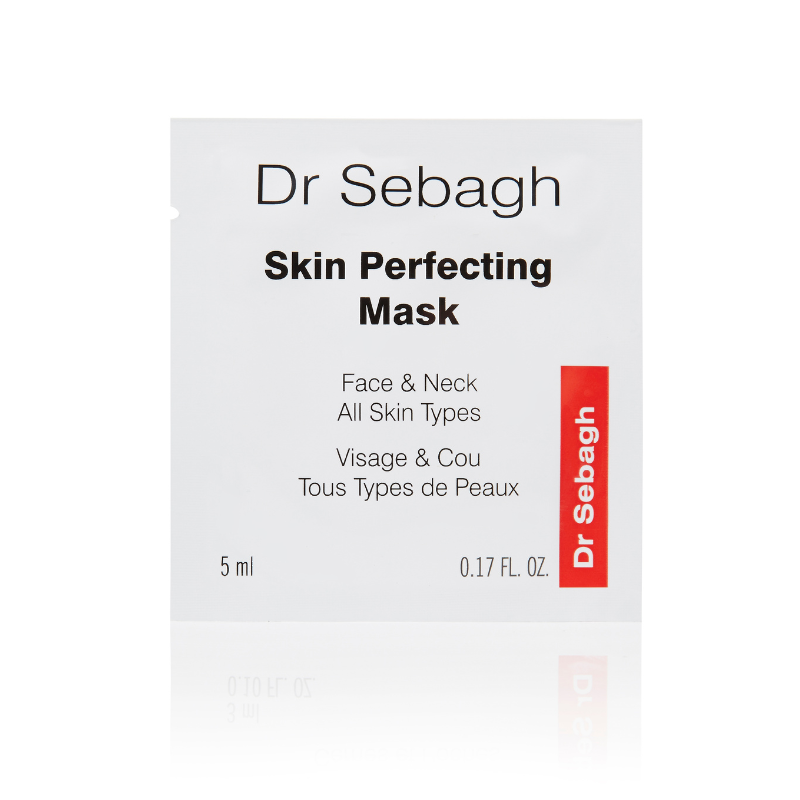
- Skin Perfecting Mask. A complementary purifying clay mask that draws out deeper impurities and residue. Use after exfoliation to complete the weekly skin reset.
For those with sensitive skin, the Sensitive Skin version of the mask was developed to deliver the same renewal outcome without risk of irritation or redness. The exfoliation is equally effective; the formula is adapted for a lower tolerance threshold, making professional-level results available to skin types that often have to forgo chemical exfoliation entirely.

06 Your Protocol
How to Use the Deep Exfoliating Mask, By Skin Type
Exfoliation frequency is not one-size-fits-all. The right cadence depends on your skin type, your skin's current tolerance, and what else you are using in your routine. The guidance below reflects best practice for each skin profile, and the principle throughout is that consistency over time produces better results than intensity in the short term.
Normal to Oily Skin
2–3 times per week- Oilier skin builds up dead cells and congestion faster, so more frequent exfoliation is well-tolerated and beneficial
- Use the standard Deep Exfoliating Mask
- Follow with a lightweight serum or moisturiser
- Pair with the Skin Perfecting Mask once weekly for deep pore clearing
Combination Skin
1–2 times per week- Begin with once weekly and increase to twice if your skin responds well
- Focus application on areas with congestion or uneven texture
- Follow with a balancing moisturiser appropriate for mixed zones
- Avoid over-exfoliating drier areas
Dry Skin
Once per week- Dry skin benefits enormously from exfoliation (dead cells compound moisture loss) but requires a measured approach
- Use the standard mask for one session; assess your skin's response
- Always follow with a rich moisturiser to lock in hydration
- If skin feels tight post-exfoliation, reduce to every ten days
Sensitive Skin
Once per week (or bi-weekly)- Use the Deep Exfoliating Mask for Sensitive Skin exclusively
- Begin with a single weekly application and monitor your skin's tolerance
- If redness occurs, extend to every 10–14 days
- Always follow with a calming, fragrance-free moisturiser

How to Apply the Deep Exfoliating Mask
- Step 1. Begin with clean, dry skin. Remove all traces of makeup and cleanse thoroughly before applying.
- Step 2. Massage the mask evenly across the face, avoiding the eye contour. A thin, even layer is sufficient.
- Step 3. Leave in place for 3 to 5 minutes. There is no benefit to extending beyond 5 minutes; the AHAs complete their action within this window.
- Step 4. Rinse thoroughly with warm water and pat dry with a clean cloth.
- Step 5. Apply your serums and moisturiser immediately while skin is still slightly warm and receptive. This is the optimal window for active ingredient absorption.

07 Who It's For
Signs Your Skin Is Ready for the Deep Exfoliating Mask

The Deep Exfoliating Mask addresses a wide range of concerns, many of which are rooted in the same underlying problem: cell turnover that has slowed and left its evidence on the surface of your skin. If you recognise any of the following, regular exfoliation with the Deep Exfoliating Mask is likely the missing step in your routine.
- Skin that looks dull, grey, or flat regardless of how much you moisturise
- A routine that no longer delivers the results it once did
- Fine lines that appear more pronounced in certain lights or towards the end of the day
- Persistently uneven texture, rough patches, or a complexion that lacks polish
- Pigmentation, dark spots, or post-blemish marks that are slow to fade
- Congested pores or a tendency toward blackheads and surface blemishes
- A complexion that looks noticeably better immediately after a facial, and you want to replicate that at home
- Skin in your late 30s, 40s, 50s or beyond that has changed in ways you can't fully account for
The mask works especially well as a pre-event treatment, during seasonal transitions when skin can look particularly flat, and as the anchor of a weekly reset routine. Many users report a visible difference after a single use, with cumulative improvement developing over the following weeks of consistent use.
Questions & Answers
Frequently Asked Questions
What is the best exfoliant for aging skin?
Chemical exfoliants, specifically AHAs such as lactic acid, are the dermatologist-recommended choice for aging skin. They dissolve dead cell bonds without abrasion, are appropriate for thinner and more delicate mature skin, and deliver even, controlled results. Lactic acid in particular has the added benefit of being a humectant, drawing moisture into the skin as it exfoliates. The Dr Sebagh Deep Exfoliating Mask is formulated around a precision-balanced AHA complex with lactic acid at its core.
How often should you exfoliate to see anti-aging results?
For most skin types, once to twice weekly delivers the optimal balance of results and skin health. Oilier skin can tolerate up to three sessions per week. Dry and sensitive skin types should begin with once weekly and adjust based on how the skin responds. Consistency over time is more important than frequency; regular weekly exfoliation produces cumulative improvements in tone, texture, and luminosity that become pronounced over weeks and months.
Can exfoliation reduce the appearance of fine lines?
Yes, in two ways. First, removing the dead cell layer that sits over fine lines immediately makes them appear less pronounced. The uneven surface buildup that exaggerates the shadowing in and around fine lines is cleared, and skin looks smoother. Second, by accelerating cell turnover over time, regular exfoliation supports skin renewal biology, and more active renewal is associated with better skin quality, more even texture, and the gradual reduction of accumulated surface damage.
Is the Deep Exfoliating Mask suitable for sensitive skin?
The standard Deep Exfoliating Mask is formulated for normal to oily skin. For those with sensitive, reactive, or rosacea-prone skin, Dr Sebagh developed the Deep Exfoliating Mask for Sensitive Skin, a gentler AHA formulation that delivers the same cell renewal and brightening results without the risk of redness or irritation. Both formulas achieve the same clinical outcome; only the intensity profile differs.
What is lactic acid and why is it used in exfoliation?
Lactic acid is an alpha-hydroxy acid (AHA) derived from milk, and it is considered the most skin-compatible of the AHA family for regular use on mature skin. It works by breaking down the bonds between dead skin cells, allowing them to shed evenly and efficiently. Unlike glycolic acid, which is smaller in molecule size and penetrates more aggressively, lactic acid exfoliates more gradually, making it suitable for a wider range of skin types. It is also a natural humectant, providing hydration as it exfoliates.
Why do my skincare products seem to stop working over time?
This is one of the most common experiences reported in skincare, and dead cell buildup is frequently the cause. As cell turnover slows with age, a layer of dead cells accumulates on the skin's surface, forming a partial barrier that limits how deeply active ingredients can penetrate. Serums, moisturisers, and treatments applied over this barrier are less effective than they would be on freshly exfoliated skin. Regular exfoliation restores the skin's receptiveness to active ingredients, often producing a noticeable improvement in how the rest of your routine performs.
How long does the Deep Exfoliating Mask take to work?
The mask is designed to be left on for 3 to 5 minutes, sufficient time for the AHA complex to dissolve dead cell bonds and prepare the skin for rinsing. Visible results, including brighter, smoother, more refined skin, are typically apparent after the first use. Cumulative results, including improvements in pigmentation, fine lines, and overall luminosity, develop over consistent weekly use across several weeks.
Can I use the Deep Exfoliating Mask alongside retinol or vitamin C?
Yes, but with timing considered. On exfoliation days, allow the skin to settle before applying retinol or other high-potency actives, typically by using the mask in the morning and your retinol at night, or by spacing application. Freshly exfoliated skin is more receptive to actives, which is beneficial, but this increased receptiveness also means actives can feel stronger than usual. If you use prescription retinoids, consult your dermatologist about the right sequencing for your specific routine.
The Principle
The Simplest Change That Makes Everything Else Work Better
There is something genuinely satisfying about a skincare step that delivers visible results immediately and better results over time. Exfoliation is that step. It is the intervention that makes your skin more responsive, your complexion more luminous, and your entire routine more effective. It addresses the biological reality of ageing skin, not by masking it, but by actively working with the skin's own renewal system to restore what time gradually reduces.
At Dr Sebagh, the Deep Exfoliating Mask was developed on this principle. Formulated by a cosmetic physician for the specific demands of ageing, renewal-slowed skin, it delivers professional-grade results in five minutes and compounds them over weeks and months of consistent use. Whether you're in your 30s building an anti-aging foundation, or in your 50s restoring radiance and clarity, this is the step that unlocks everything else.
Read more
Your skin keeps a record of your stress levels. Chronically elevated cortisol breaks down collagen, weakens the skin barrier, triggers breakouts and accelerates cellular ageing — all through distin...

From exhaust fumes to HEV light, urban environments attack skin daily. Dr Sebagh explains the science and exactly how to defend your complexion.
Leave a comment
All comments are moderated before being published.
This site is protected by hCaptcha and the hCaptcha Privacy Policy and Terms of Service apply.